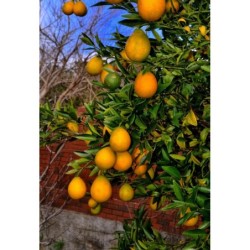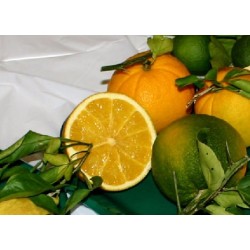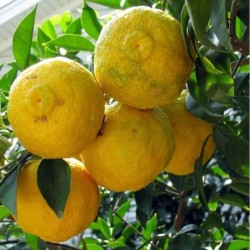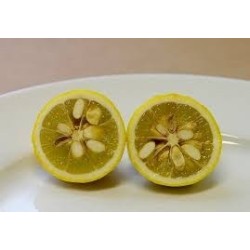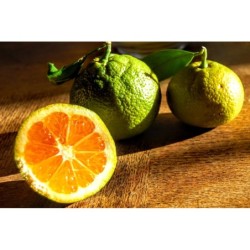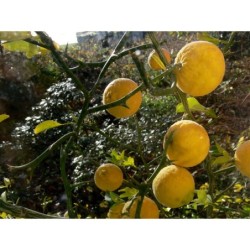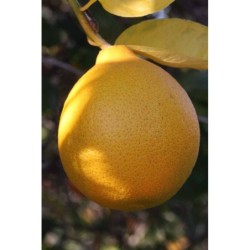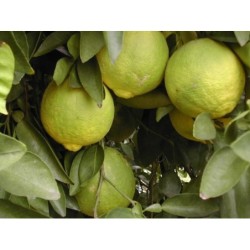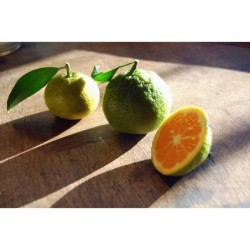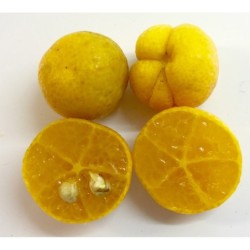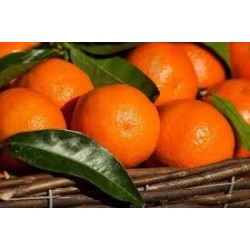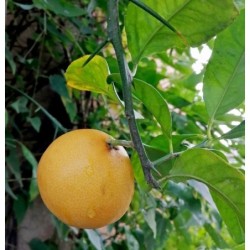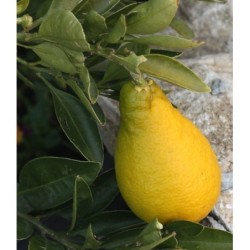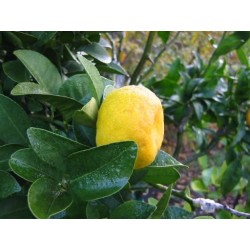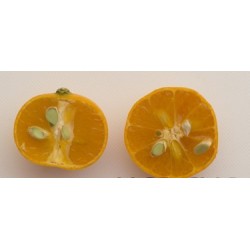
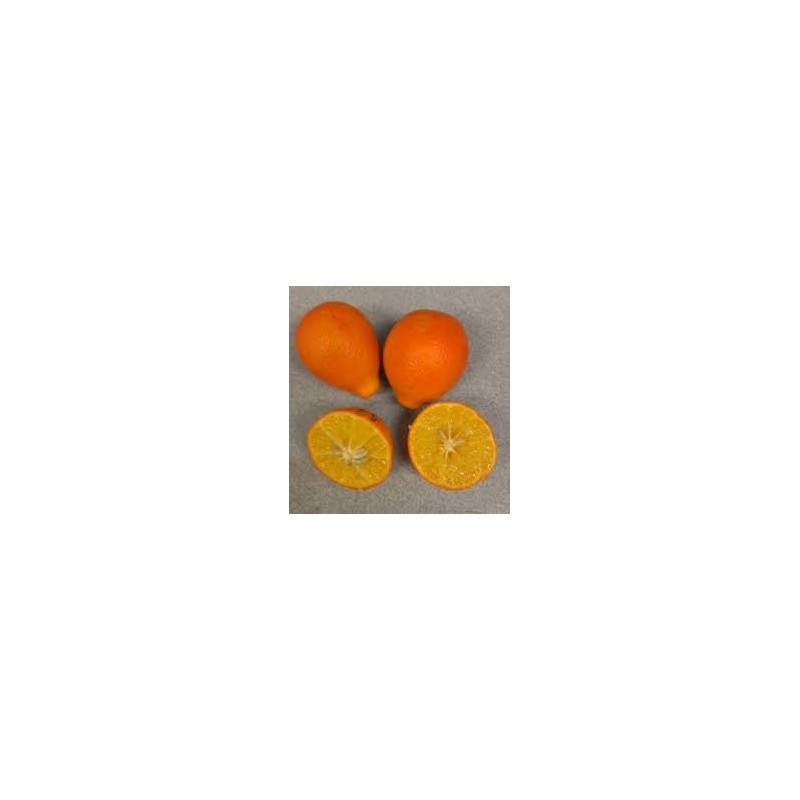


A small fruit eaten whole, with a sweet peel and tangy pulp, that stays on the tree for several months in winter. Very productive and superb in a pot, it withstands down to −13 °C.
The 'Nippon' orangequat was born in 1931 from a cross between the satsuma mandarin and the 'Meiwa' kumquat, made by Dr Eugene May for the United States Department of Agriculture. 'Nippon' remains to this day the only named cultivar of this cross.
Like a kumquat: whole, with the peel, whose sweetness balances the acidity of the pulp. It also makes an excellent marmalade.
Covered in fruit in winter, it is ideal in a large pot on a south-facing terrace. In open ground, choose a sheltered spot and protect it below −8 °C.
You receive a young grafted tree about 40 cm tall above the pot, low-grafted onto a Poncirus trifoliata rootstock from our own production. Planted young, it roots straight into your garden soil and establishes better than a tree kept in a pot for years.
Because it is grafted low, the variety itself forms the trunk: the tree stands on its own without a stake and can regrow from above the graft after a severe frost. All our citrus trees are grown at 1,000 m altitude in the Livradois, never in a heated greenhouse, with organic fertiliser only.
Grafted trees are shipped from June; the rest of the year, you can pre-order them.
A small fruit eaten whole, with a sweet peel and tangy pulp, that stays on the tree for several months in winter. Very productive and superb in a pot, it withstands down to −13 °C.