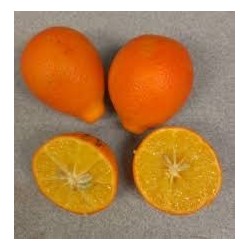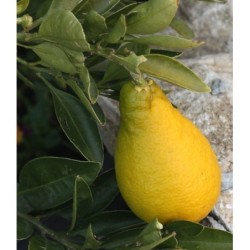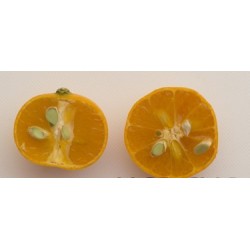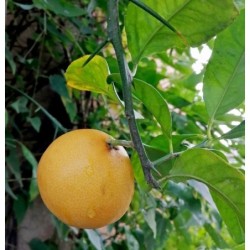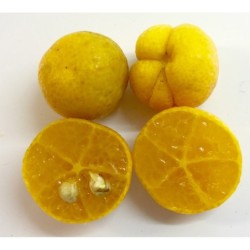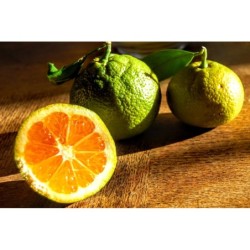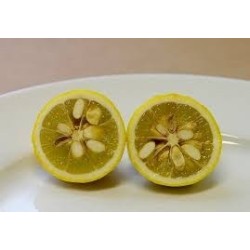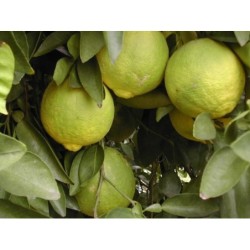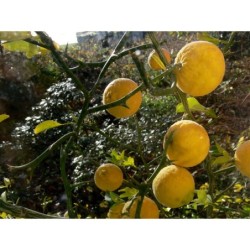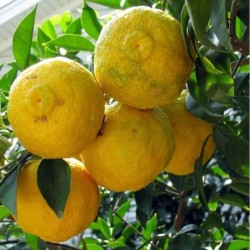
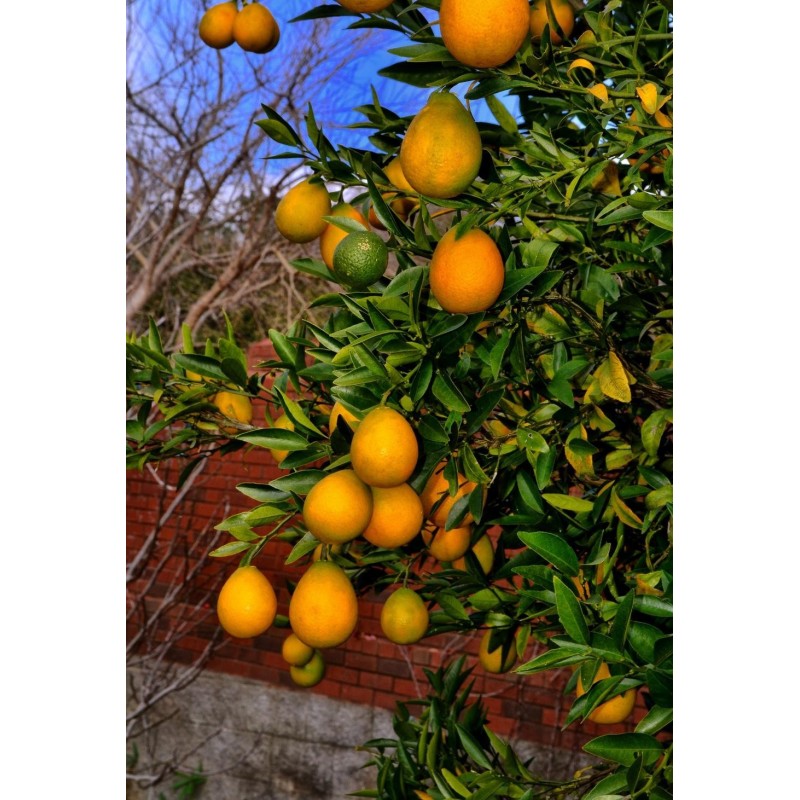


One of the hardiest edible citrus: down to −15 °C. Picked green, it replaces lemon in winter; ripe in spring, it offers the sweet flesh of an orange and the sweet zest of a kumquat.
A historic classic of American breeding, the 'Thomasville' citrangequat combines kumquat, orange and Poncirus. Introduced to France as early as 1923 at the Vilmorin arboretum near Paris, it fruited there. Of the three named citrangequats, it is the most widely grown, for the size and quality of its fruit.
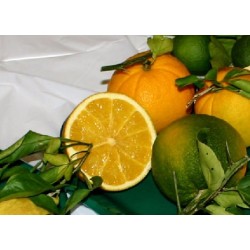
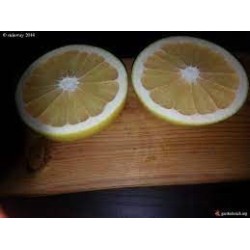
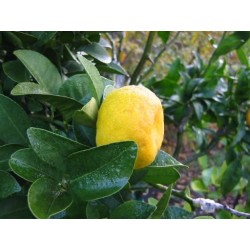
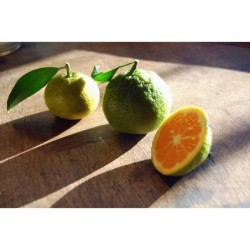
In December, picked green, it replaces lemon to accompany your winter dishes. Around March, it turns yellow and takes on a grapefruit flavour. In April, orange and fully ripe, it becomes one of the best kumquats.
Full sun, well-drained, slightly acidic soil. Its vigour allows it to be trained as a small tree; plant it away from paths, as it is thorny.
You receive a young grafted tree about 40 cm tall above the pot, low-grafted onto a Poncirus trifoliata rootstock from our own production. Planted young, it roots straight into your garden soil and establishes better than a tree kept in a pot for years.
Because it is grafted low, the variety itself forms the trunk: the tree stands on its own without a stake and can regrow from above the graft after a severe frost. All our citrus trees are grown at 1,000 m altitude in the Livradois, never in a heated greenhouse, with organic fertiliser only.
Grafted trees are shipped from June; the rest of the year, you can pre-order them.
One of the hardiest edible citrus: down to −15 °C. Picked green, it replaces lemon in winter; ripe in spring, it offers the sweet flesh of an orange and the sweet zest of a kumquat.