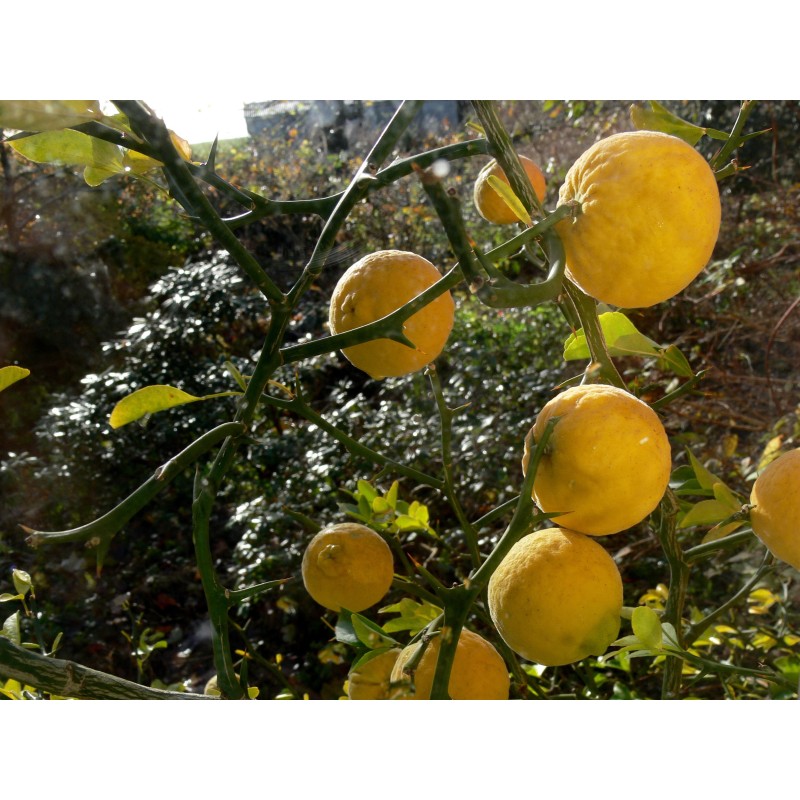

The hardiest of all citrus: it withstands temperatures down to −25 °C. Its small, highly fragrant fruits make unusual jams, syrups and liqueurs. Its long thorns turn it into an impenetrable defensive hedge.
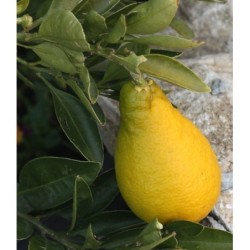
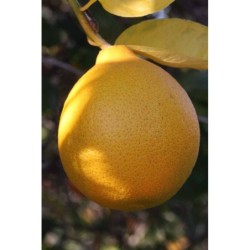
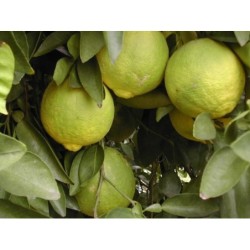
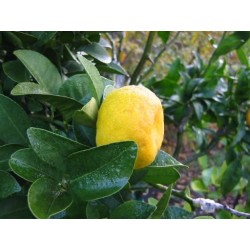
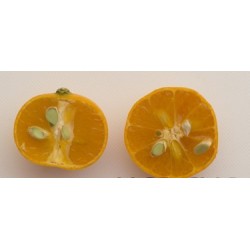
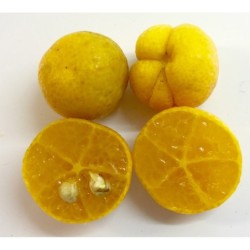
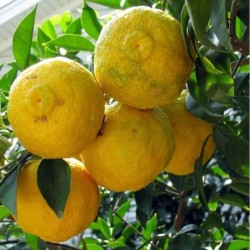
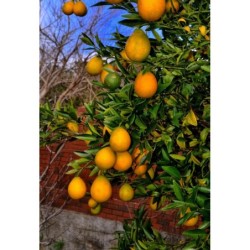
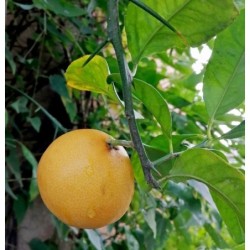
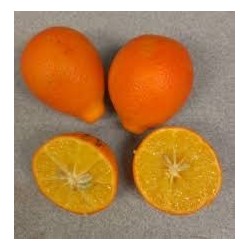
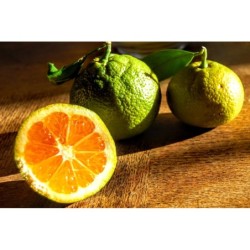
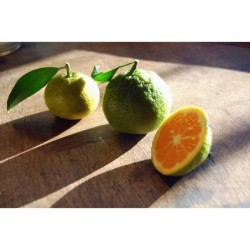
The trifoliate orange, also called hardy orange or Japanese bitter orange, is the citrus for cold climates. It drops its leaves in winter, flowers white in spring before the leaves appear and, in autumn, bears small golden fruits with a powerful scent. It is also the rootstock of all our citrus trees, to which it passes on its cold hardiness.
It is the only citrus that flowers and fruits regularly in open ground in parts of Germany. Since 1897, breeders have crossed it with sweet citrus to pass on its hardiness: citranges, citrangequats and citrandarins are all its descendants.
Sun or partial shade, any well-drained soil, even poor. For a hedge, plant every 60 to 80 cm: the thorns form a barrier that animals cannot cross. Its flowers feed pollinators from early spring.
Seedlings grown from our own trees, 15 to 45 cm depending on the batch, supplied in a small pot or with a root ball depending on the season. They are raised at 1,000 m altitude, never in a heated greenhouse, with organic fertiliser only.
The hardiest of all citrus: it withstands temperatures down to −25 °C. Its small, highly fragrant fruits make unusual jams, syrups and liqueurs. Its long thorns turn it into an impenetrable defensive hedge.