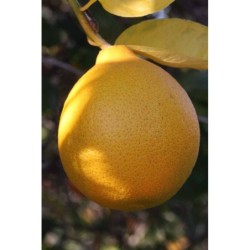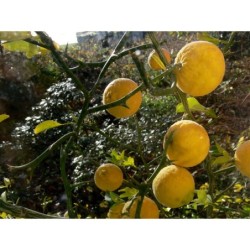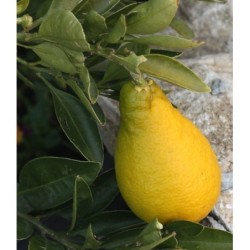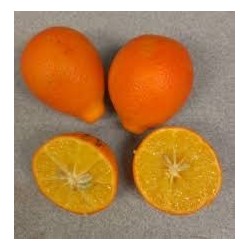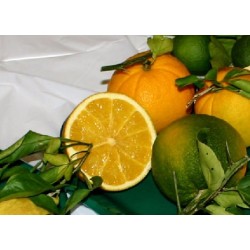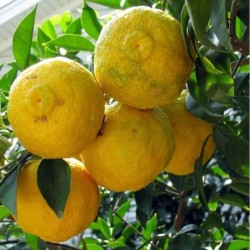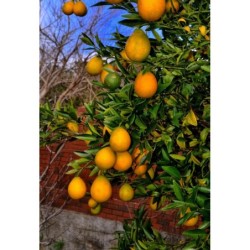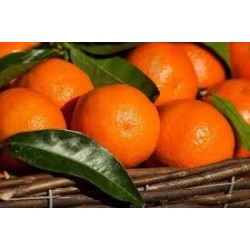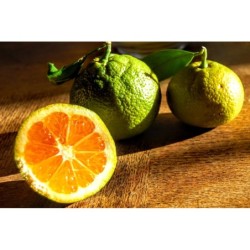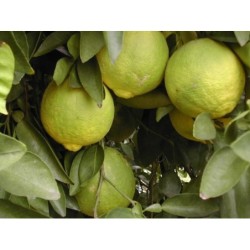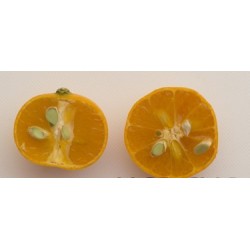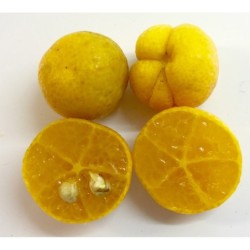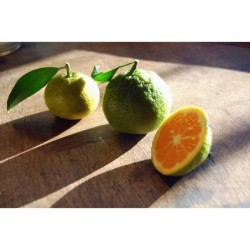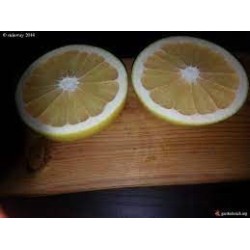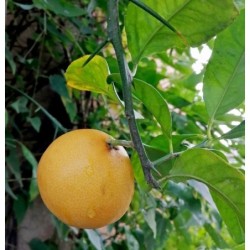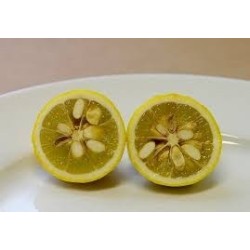
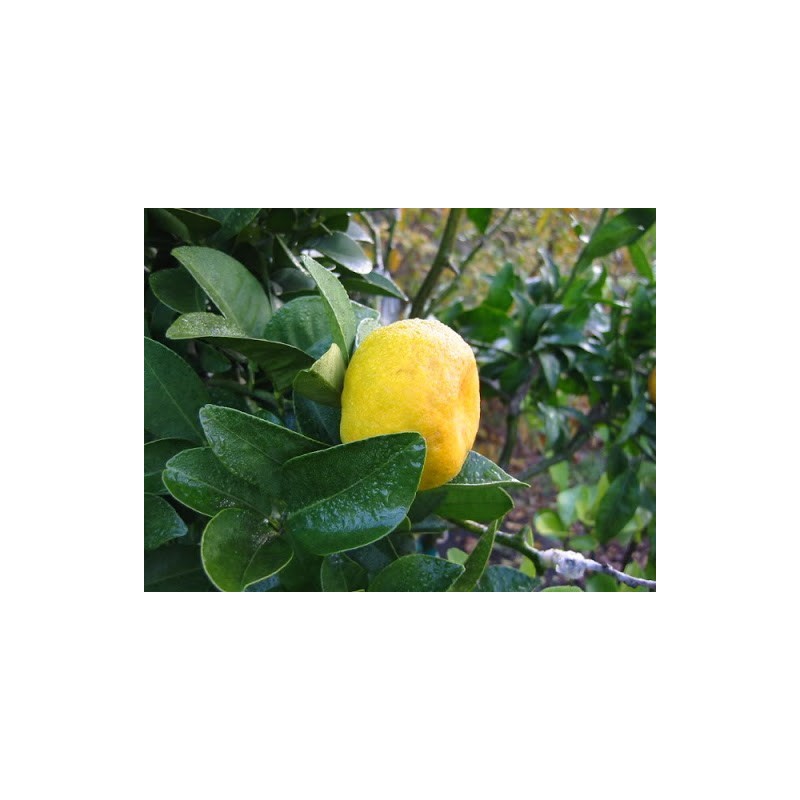

A rare, seedless Japanese mandarin, grown for more than two centuries on a small island in the Amami archipelago. Picked green, it replaces lemon; yellow, it becomes sweet and fragrant. The tree withstands down to −12 °C.
Keraji was discovered at the end of the 18th century in the hamlet of Keraji, on Kikai Island in southern Japan. It is still grown there in small family orchards. In 2010, researchers from Kagoshima University traced its origin: a probable cross between two old citrus of the region, kunenbo and kikai mikan.
On its native island, local citrus are giving way to commercial crops. Growing Keraji also helps preserve a rare variety.
Full sun, rich, well-drained soil. Protect it below −10 °C during its first years.
You receive a young grafted tree about 40 cm tall above the pot, low-grafted onto a Poncirus trifoliata rootstock from our own production. Planted young, it roots straight into your garden soil and establishes better than a tree kept in a pot for years.
Because it is grafted low, the variety itself forms the trunk: the tree stands on its own without a stake and can regrow from above the graft after a severe frost. All our citrus trees are grown at 1,000 m altitude in the Livradois, never in a heated greenhouse, with organic fertiliser only.
Grafted trees are shipped from June; the rest of the year, you can pre-order them.
A rare, seedless Japanese mandarin, grown for more than two centuries on a small island in the Amami archipelago. Picked green, it replaces lemon; yellow, it becomes sweet and fragrant. The tree withstands down to −12 °C.